Search Our Products

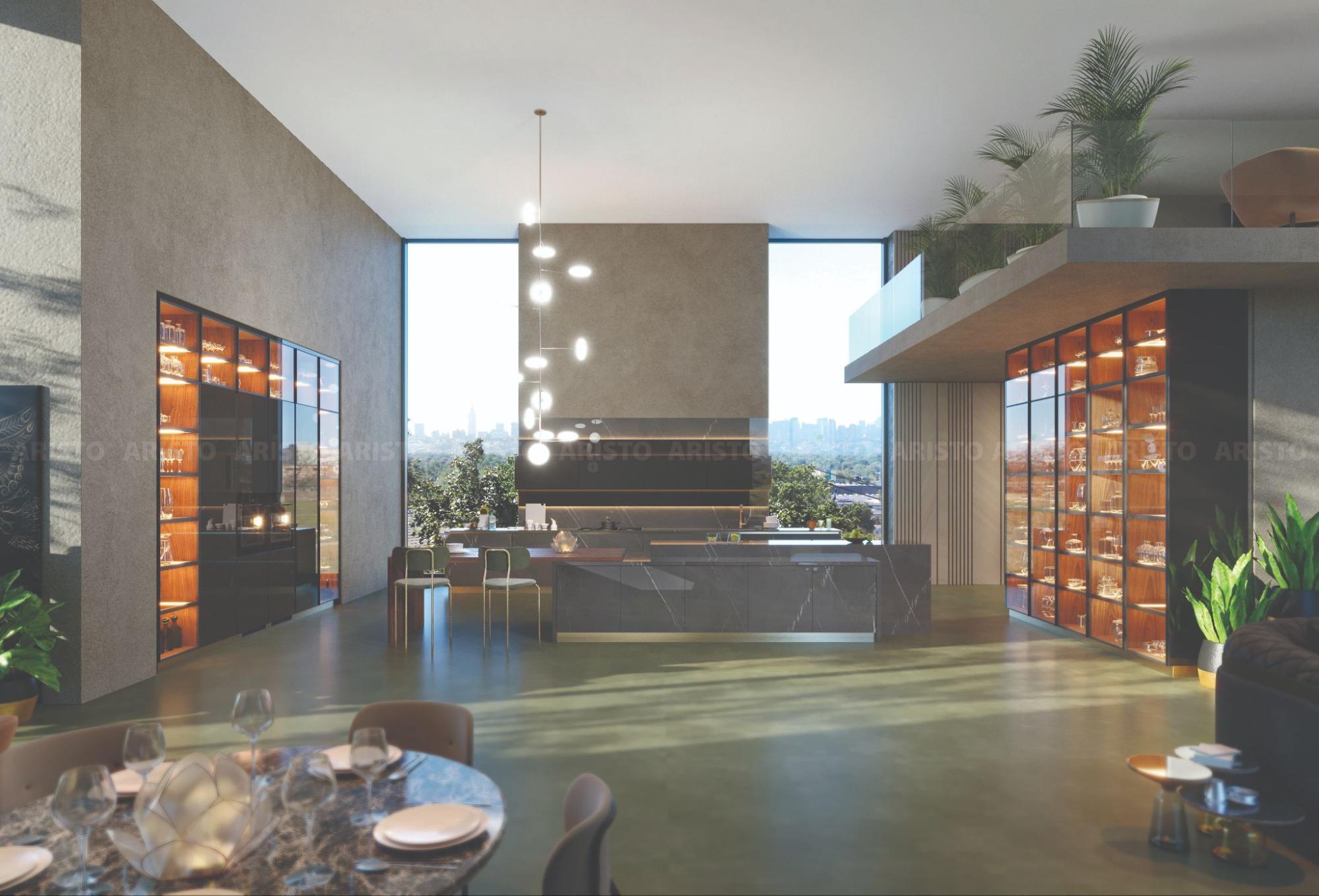
Designing your dream kitchen starts with one fundamental decision: the layout. Whether you’re renovating a compact apartment in Mumbai or building a spacious villa in Bengaluru, the kitchen layout you choose determines everything from daily workflow to long-term storage capacity. This guide walks you through the six most popular kitchen layouts, helping you match the right design to your home type and cooking style.
The six most popular kitchen layouts are galley, L-shaped, U-shaped, one-wall, island, and peninsula layouts, each balancing space and workflow differently.
Island: Best for large, open-plan homes; adds prep space and casual seating.
Parallel (Galley): Best for heavy Indian cooking in long, narrow apartments; separates wet and dry zones.
Straight (One-Wall): Best for under 80–90 sq ft; ideal for studio apartments and secondary kitchens.
L-Shaped: Versatile for small to medium homes; excellent traffic flow with corner efficiency.
U-Shaped: Maximum storage for big families; uses three walls for dedicated cooking zones.
Peninsula: Island alternative when floor space is limited; works as a room divider.
Aristo India offers modular kitchen solutions across all these layouts with premium finishes, aluminium hardware profiles, and smart internal accessories designed for Indian homes.
Ready to see which layout fits your space? Visit your nearest Aristo showroom or book a layout consultation today.
Layout decisions made during the design phase will affect your daily comfort for the next 10–15 years. Getting this right in 2026 means fewer frustrations every time you cook.
Kitchen layout impacts: – movement (number of steps between fridge, sink, hob), – storage (where masalas, heavy kadhais, tawas, and major appliances go), – ventilation (chimney performance, cross-breeze), – safety (hot oil splatter, kids’ movement), – appliance placement (fridge door swing, wall oven height, dishwasher access).
The work triangle connects your three primary work stations: refrigerator, sink, and cooktop. Each side should measure 4–9 feet, with the total perimeter between 13–26 feet. For Indian cooking, consider adding a “fourth point”—a dedicated prep or masala zone near the hob.
Simple workflow sequence: Fridge → Prep Counter → Sink → Hob → Serving Zone
Modern Indian homes often expand beyond the triangle into distinct work zones (prep, cooking, cleaning, storage), particularly in island and parallel modular kitchen design configurations. A well-planned modular kitchen from Aristo can correct existing room constraints through smart planning and custom cabinetry.
This section covers the most widely used layouts in Indian homes: island, parallel, straight, L-shaped, U-shaped, and peninsula.
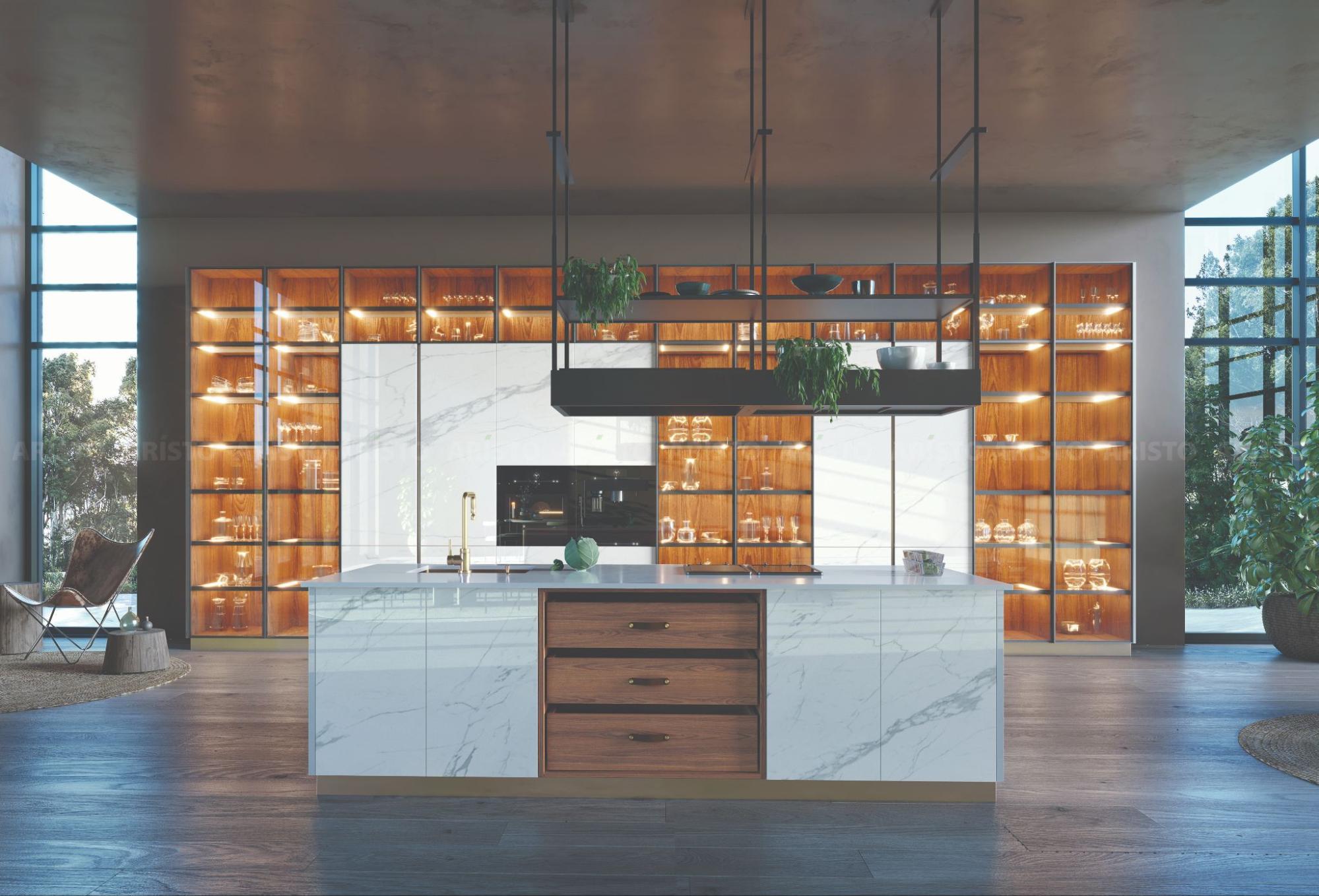
An island kitchen layout incorporates a freestanding workspace in the center of the kitchen, offering additional prep area, storage, and often seating, making it ideal for entertaining. Kitchen layouts with islands can include nearly any arrangement, but typically fit best in larger kitchens with cabinets and appliances arranged on one to three walls around the central island.
Best For: Large, open-plan homes; entertaining and family interaction.
Minimum Size: Approximately 13 ft × 15 ft kitchen area, with at least 42–48 inches clearance on all sides for comfortable circulation.
Pros:
Extra counter space and additional storage (drawers on both sides, built-in wine racks, under-counter appliances)
Multiple functions: homework station, casual dining spot, central prep area
Allows premium design elements such as statement pendant lights and contrasting stone tops
Cons:
Not suitable for compact apartments due to circulation blockage
Requires careful planning of electrical points, hob, and chimney
Higher budget due to extra carcass, countertop, and flooring needs
Ideal Home Type: Larger apartments and villas in metros like Bengaluru, Mumbai, Delhi NCR, and Hyderabad with open-plan living spaces.
Aristo Tip: Consider placing the sink on the island with a dishwasher below or keep the island as a dry prep and breakfast counter with wet work against the wall to optimize workflow and ventilation.
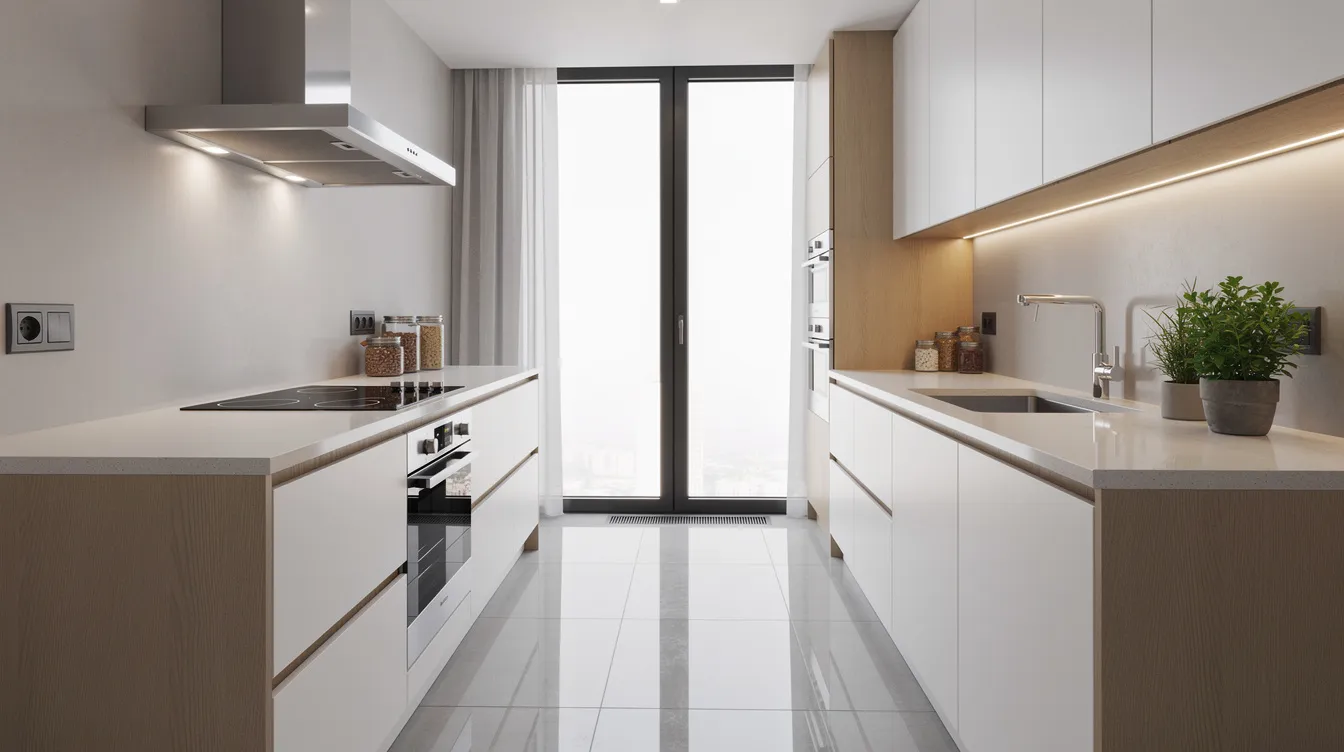
The galley kitchen layout consists of two parallel rows of cabinets and appliances with a central walkway, making it ideal for maximizing space in narrow areas. This parallel modular kitchen design is commonly found in long, rectangular kitchen rooms in Indian apartments.
Best For: Long, narrow apartments with heavy Indian cooking demands.
Minimum Size: Ideal counter distance between two parallel walls is 3.5–5 feet (105–150 cm).
Pros:
Separate wet and dry zones enhance workflow
Efficient work triangle with minimal walking
Easy to keep one counter clutter-free for serving or baking
Cons:
Can feel cramped for multiple cooks
Limited dining or socializing space
Ideal Home Type: Indian apartments with narrow kitchen floor plans.
Aristo Tip: Place tall cabinets (fridge, oven tower) at either end to frame the layout, keep sink and hob on opposite counters, and use full-height wall cabinets with pull-out shelves to maximize vertical space.
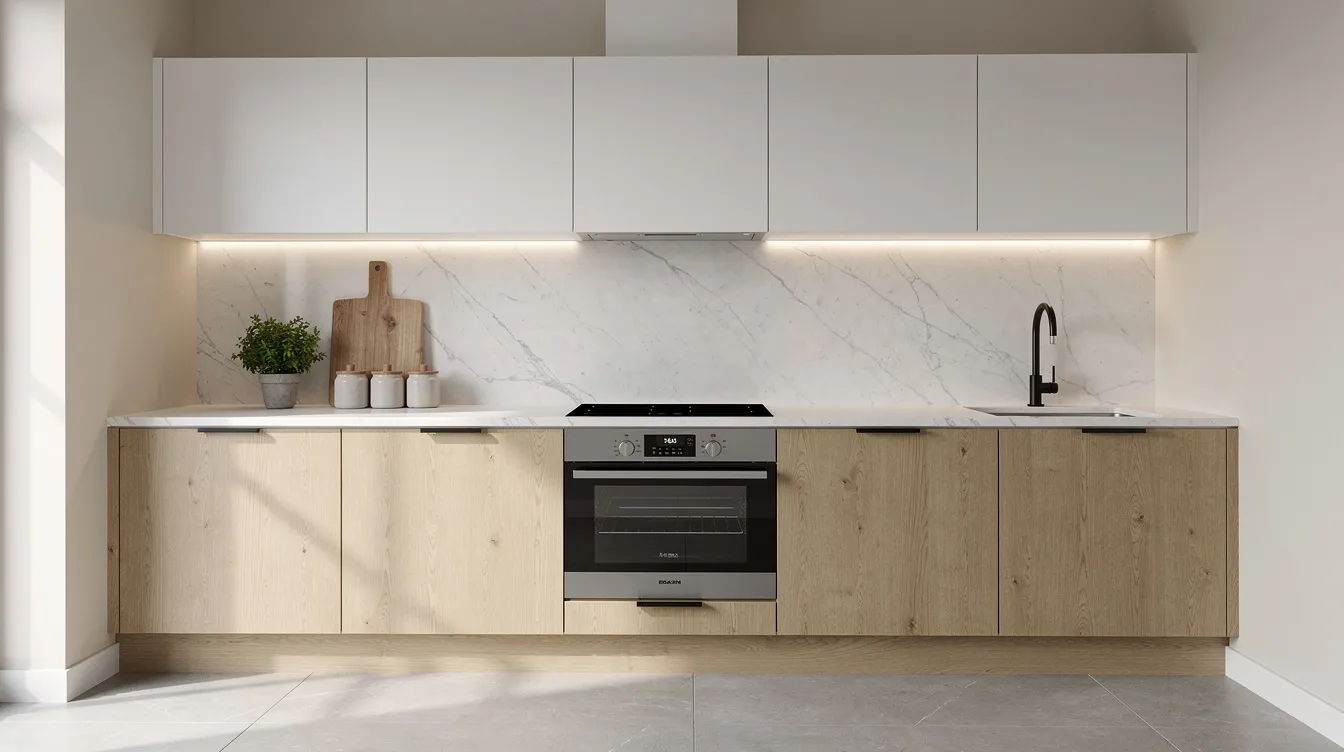
A one-wall kitchen layout arranges all kitchen components along a single wall, making it a space-saving option ideal for small apartments or open-concept living areas. This straight modular kitchen design works best for compact homes, rental apartments, studio apartments, or secondary kitchens—typically under about 70–90 sq ft.
Best For: Compact homes, studio apartments, and secondary kitchens.
Minimum Size: Best for kitchens under 70–90 sq ft.
Pros:
Maximizes vertical space with tall units and loft cabinets
Integrated appliances keep the line clean
Simple zoning from fridge to serving area
Cons:
Limited counter and storage space
Linear workflow can restrict appliance placement options
Ideal Home Type: Small apartments and open-concept living areas.
Aristo Tip: Use tall pull-out pantries and upper cabinets up to the ceiling. Incorporate slim accessories like wall-mounted rails and corner shelves to optimize vertical space.
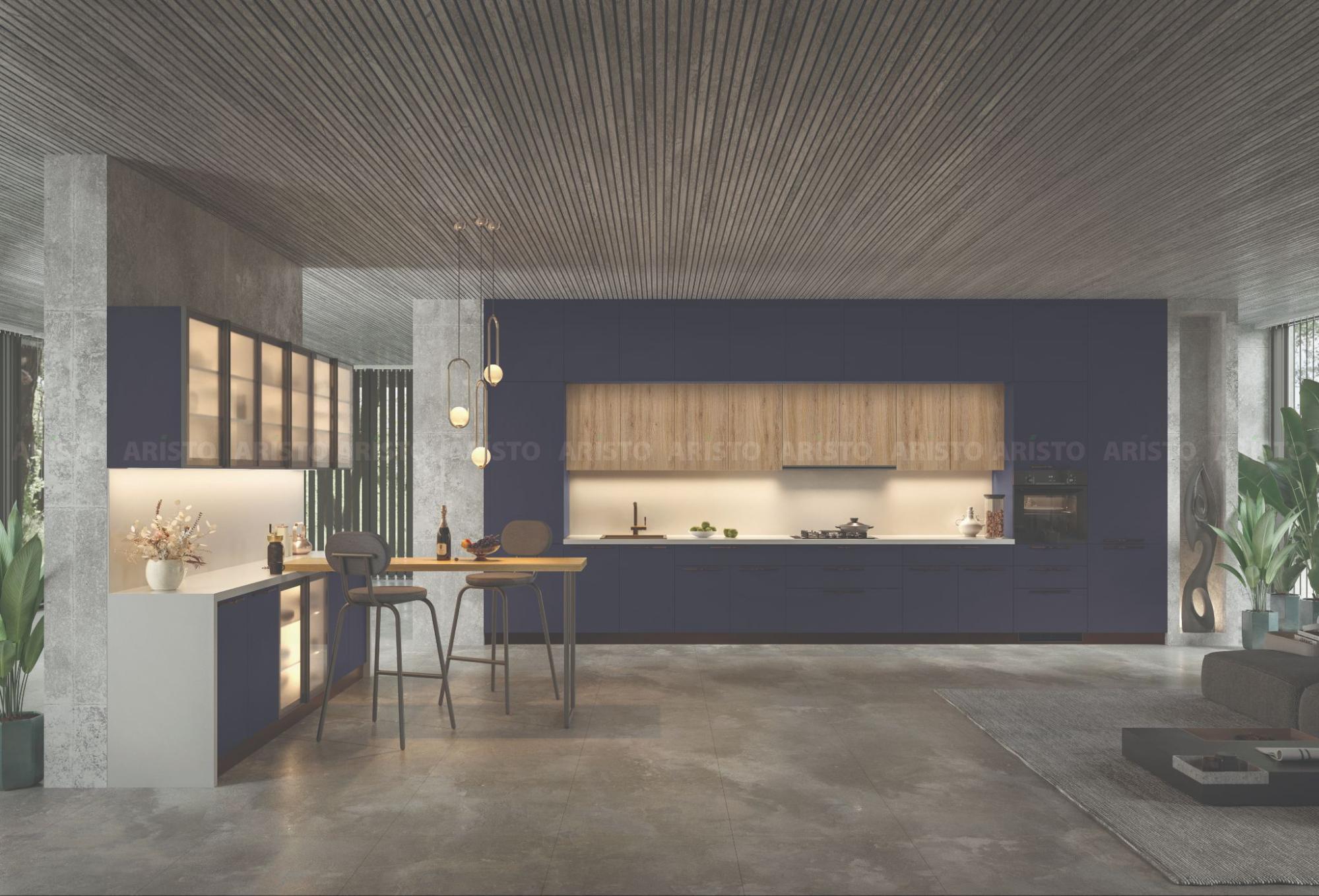
An L-shaped kitchen layout features cabinets and appliances arranged along two adjacent walls, forming an L shape, which is adaptable for both small and large spaces. This configuration works well in medium-sized homes and open layouts where one leg opens to the dining area or living room.
Best For: Small to medium homes and open-plan layouts.
Minimum Size: Suitable for kitchens around 100–140 sq ft.
Pros:
Efficient use of corner space
Good traffic flow and flexibility for adding islands or dining areas
Seamlessly connects to living and dining spaces
Cons:
Corner cabinet access can be challenging
Less storage than U-shaped kitchens
Ideal Home Type: Medium-sized urban homes and open-concept apartments.
Aristo Tip: Use corner solutions like lazy Susans and magic corners. Place hob on the longer leg, sink on the adjoining wall, and refrigerator at one end for optimal workflow.
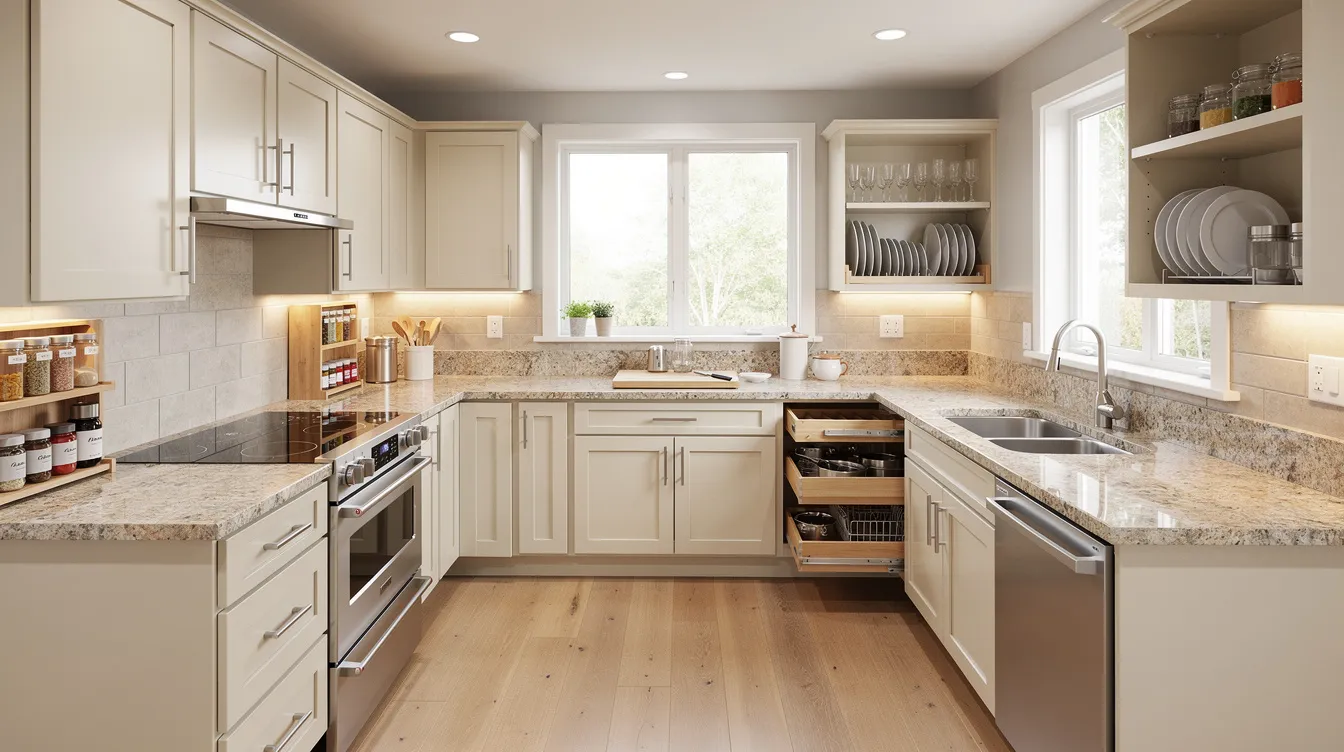
A U-shaped kitchen layout features three walls lined with cabinets and appliances, creating an efficient work triangle that maximizes storage and counter space. This design surrounds the cook with counters and base cabinets on three sides.
Best For: Large families and joint households needing multiple cooking zones.
Minimum Size: Best for kitchens above 120–150 sq ft.
Pros:
Maximum storage and counter space
Dedicated zones for cooking, cleaning, and storage
Supports multiple cooks working simultaneously
Cons:
May feel cramped in smaller kitchens
Corner spaces can be hard to utilize effectively
Ideal Home Type: Large apartments and villas with spacious kitchens.
Aristo Tip: Position refrigerator and range at opposite ends of the U, with the sink near the center. Utilize Aristo’s corner pull-out organizers and tall carousel solutions to maximize storage.
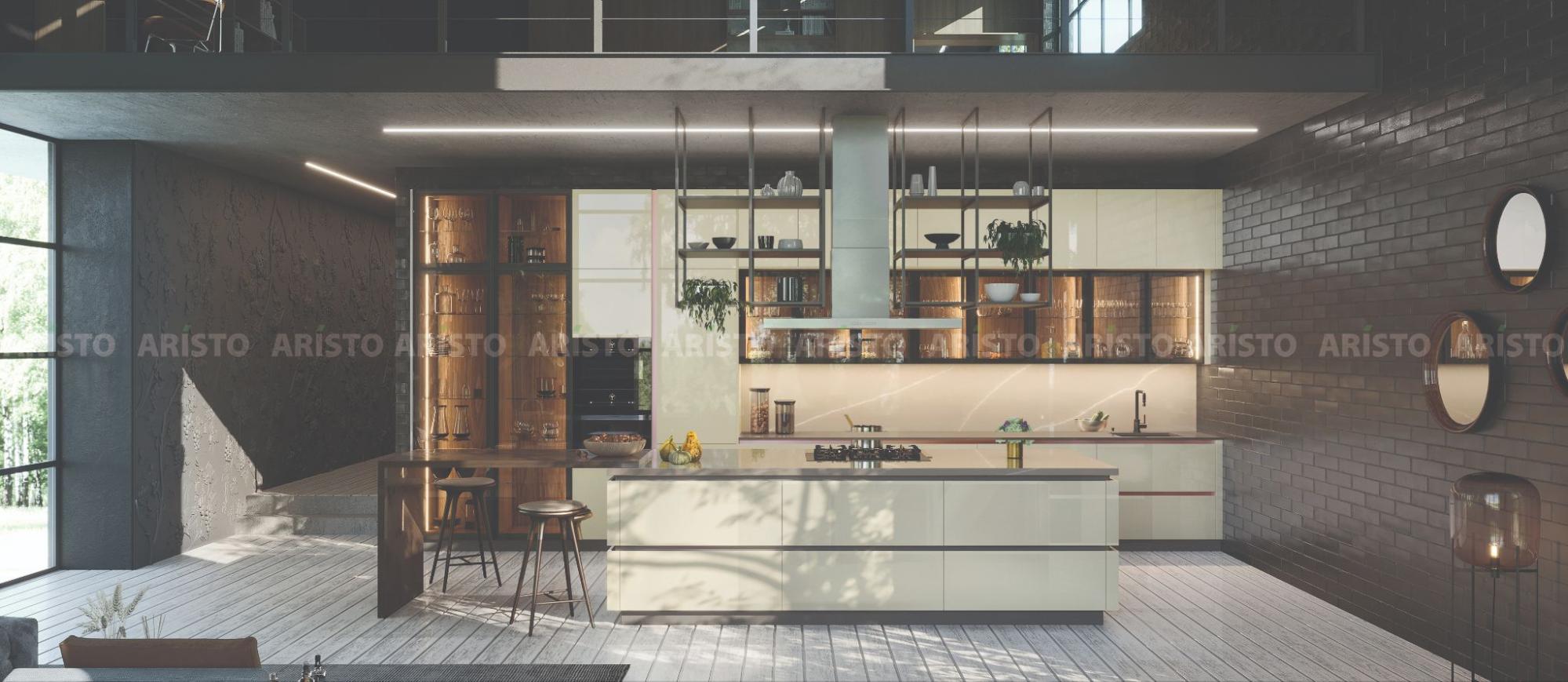
A peninsula kitchen layout is an extension of the U-shaped or L-shaped design, featuring a connected counter extension that offers additional counter space, storage, and seating without requiring a separate island.
Best For: Medium-sized kitchens needing extra counter space but lacking room for a full island.
Minimum Size: Suitable for moderate-sized kitchens, typically smaller than those accommodating islands.
Pros:
Provides additional counter and storage space
Creates a partial room divider
Offers seating options for casual dining
Cons:
Can cause traffic flow issues if not placed thoughtfully
Less flexible than freestanding islands
May limit access to some cabinets
Ideal Home Type: Medium-sized homes and semi-open kitchens.
Aristo Tip: Use the peninsula as a breakfast counter or casual dining spot. Position the sink and refrigerator along the open side for easy access without disrupting workflow.
The “best” layout depends on home type (apartment versus villa), available space, and cooking style (light continental versus heavy, oily, tadka-rich Indian food).
Best layout by home type:
Addressing Indian-specific needs:
Masala storage: Tall pull-outs near the hob and spice racks inside wall units
Chimney placement: Always central over hob with proper duct length; critical in parallel and u shaped design layouts for heavy frying
Tandoor/oven and commercial style appliances: Place near power points with proper ventilation
Wet and dry zones: Essential for parallel and U-shaped kitchens where washing and cooking must not clash
Scenario-based guidance:
If you cook twice daily with lots of deep-frying, choose layouts with strong chimney positions and minimal cross-traffic (U-shaped or parallel)
If you entertain frequently and prefer open concept kitchen layout designs, island or peninsula layouts connected to dining work best
If your kitchen opens directly into living rooms in a compact flat, a straight or L-shaped modular kitchen with premium shutters keeps the space looking refined
Open-concept kitchen layouts create a spacious, social environment but can reduce wall space for cabinetry and appliances, leading to cooking odors and noise being less contained.
Here’s a practical decision framework to enhance functionality and guide your selection:
Measure your kitchen shell: Length, width, window and door positions, column projections
Map utility points: Plumbing, gas inlet, electrical outlets, chimney duct location
Assess family size and usage: Number of daily meals, people cooking simultaneously, domestic help
Decide appliance list upfront: Fridge size, oven, dishwasher, microwave, mixer, OTG, water purifier, panel ready appliances
Estimate storage needs: Bulk grains, tiffins, large pots, small appliances—does your kitchen need to accommodate a traditional kitchen setup or a more contemporary approach?
Check movement and safety: Clear pathways for kids and elders, avoid hob near narrow walkway areas and door swings
Define budget range: Layouts with islands or extensive tall units usually cost more
Consider future flexibility: Possibility of adding appliances later or converting closed kitchen to open
Once these answers are clear, shortlist 2 layouts:
Small rectangular space → parallel vs straight
Medium square-ish space → L-shaped vs U-shaped
Large open space → L-shaped with island vs U-shaped with peninsula
Whether your space calls for a g shaped kitchen layout, a compact single wall design, or an expansive g shaped kitchen with maximum storage, modular systems make customisation, upgrades, and maintenance significantly easier.
Core modular advantages:
Choosing the right kitchen layout is the foundation of a functional, beautiful, and efficient kitchen that fits your lifestyle and home. Whether you prefer the spacious elegance of an island modular kitchen or the space efficiency of parallel walls in a galley layout, understanding your space and cooking needs is key.
Modular kitchens from Aristo India offer tailored solutions across all popular kitchen layouts, combining premium finishes, smart storage, and durable hardware to enhance your cooking experience.
By carefully considering factors like room size, family dynamics, and appliance placement, you can create a kitchen that not only looks stunning but also supports your daily routines seamlessly. Visit an Aristo showroom or schedule a design consultation today to explore how our modular kitchen designs can transform your space into the heart of your home.